Intensive Parenting Might Be Good (Sometimes)
Children yearn for the firm hand of a mighty ruler

Today at the Institute for Family Studies we’ve continued rolling out new findings from our survey of 24,000 American parents.
What we show today is that intensive parenting may be unfairly maligned. To arrive at that conclusion, we started out by just trying to explore the question of subjective parenting difficulty in more depth. Here’s the map of states where parents say parenting is easier vs. harder:
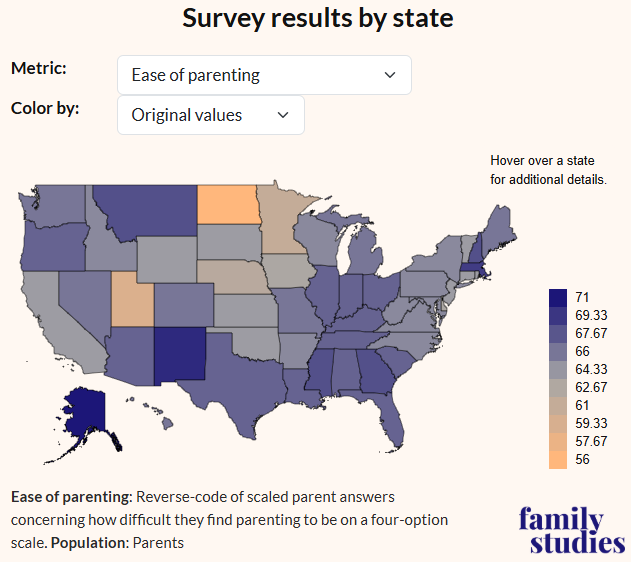
Parenting is easiest in Alaska, New Mexico, and Massachusetts, apparently, and hardest in North Dakota, Utah, and Minnesota.
What explains these trends?
In the new post at IFS, we looked at what factors predict parents rating parenting as easier or more difficult:
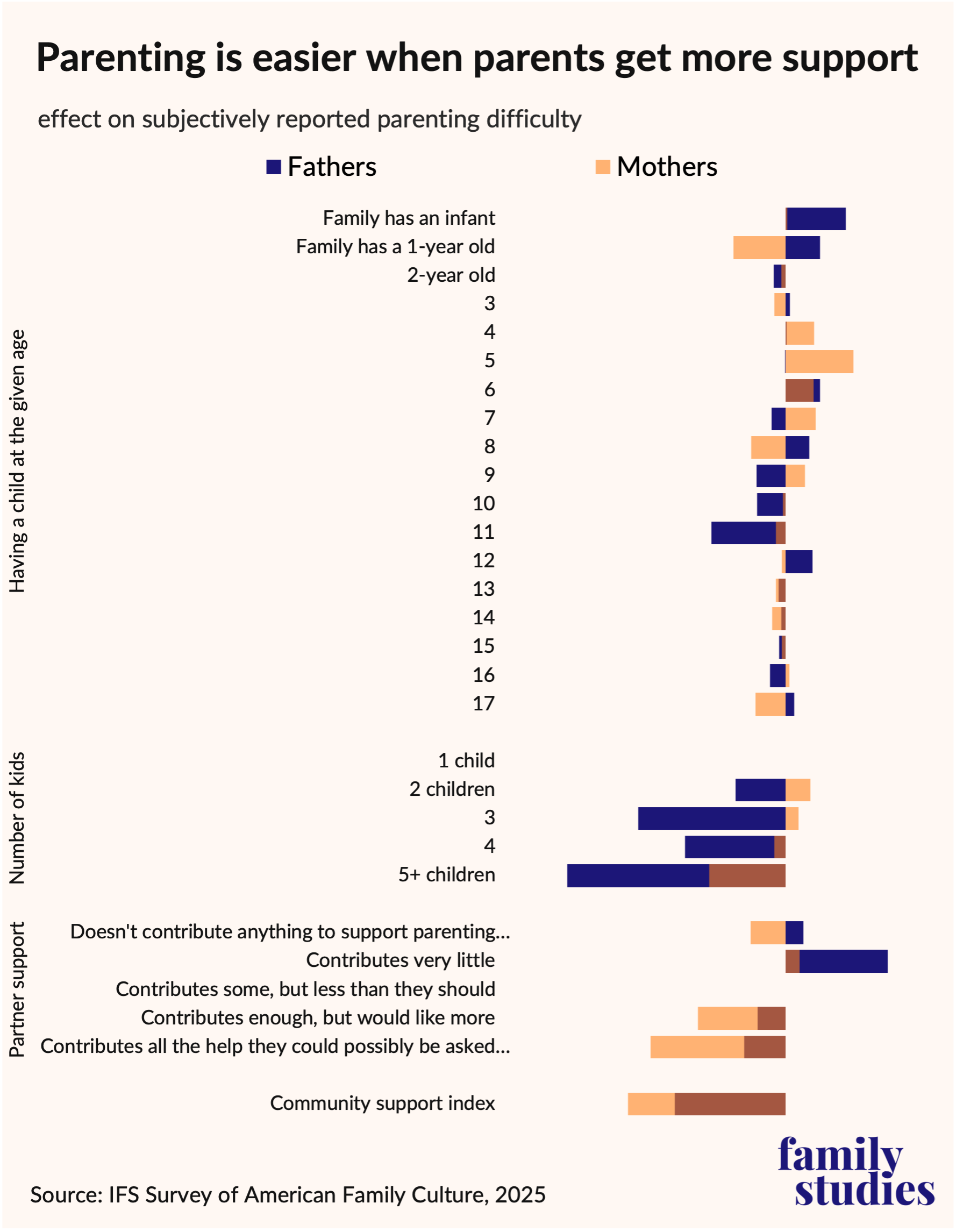
I won’t belabor these results since I explained them in the post. But the key point is support matters. The difference between a spouse who makes you feel supported and one who makes you feel abandoned is enormous. The difference between a community that makes you feel supported and one that makes you feel judged is huge.
Likewise, there are socioeconomic differences I won’t belabor; they amount to “Unemployment makes parenting feel harder, a pay raise makes parenting feel easier; but rich people are more stressed about parenting, and poorer people are more relaxed about parenting.”
Next, we looked at rules:
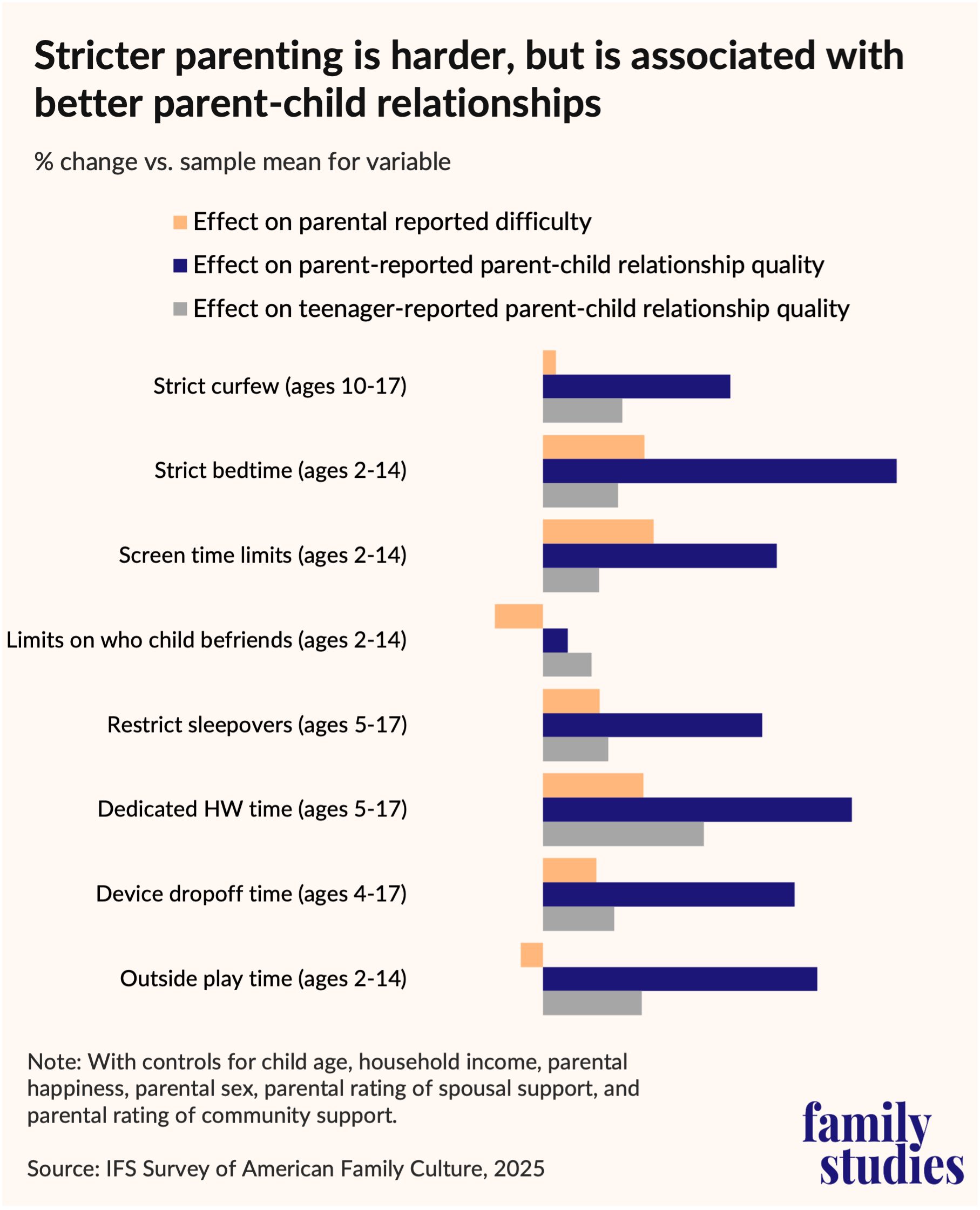
Again, in the IFS post I do the details, here you just need to know: most rules make parenting harder, but they also improve parent-child relationship quality. Stricter parenting is linked to more fulfilling family life.
But… is that intensive parenting? Intensive parenting is a very tricky to pin down. Here are some alternative measures of it:
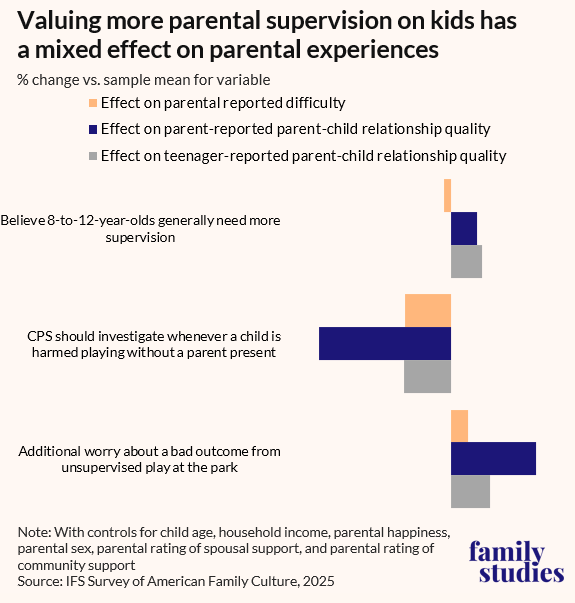
If you think 8-to-12-year-olds generally are undersupervised and need more supervision, then parenting probably… feels easier! And you probably have a better relationship with your kids!
On the other hand, if you think CPS should always investigate any time a child is harmed playing unattended, then parenting probably feels a lot easier… and your relationships with your kid are probably a lot worse.
But then when parents were given six possible “bad outcomes” from a kid playing unattended at the park, the more bad outcomes they were concerned about, the harder parenting seemed, but also the better their relationships with their kids.
So is intensive parenting good or bad?
Well… I think it depends. I’ll be revisiting this much more in the future. But my working theory is that parents are basically good influences on their kids; parents setting more expectations, norms, guidelines, and clear life scripts for kids is usually good. And yes, parents being the kind of people who take precautions to protect their kids from even hypothetical dangers (hello Cartoons Hate Her !) is often a broadly good parenting trait.
What’s not so good is parental anxiety. Parental exhaustion. Parental confusion. When parents don’t provide clear life scripts but do provide a packed schedule, kids may not benefit. When parents outsource protection to CPS, kids don’t benefit. Parental rules matter, but the rules should be about creating a “walled garden:” a place where children can achieve their independence with safe parameters, but real (age-appropriate) risks. This amounts to me saying, “You should be an intensive parent as long as you’re chill about it.”
Really enjoyed this read! Similar read from today: https://www.afterbabel.com/p/the-parenting-trap around the benefit of parental authority
Is this capturing intensive parenting or just stricter/more structured parenting? Eg it seems like this would cover traditionally strict parenting in terms of very clear rules and consequences as well as parenting that focuses on things like having major after school activities or polishing a college resume which is what I think of as intensive parenting.